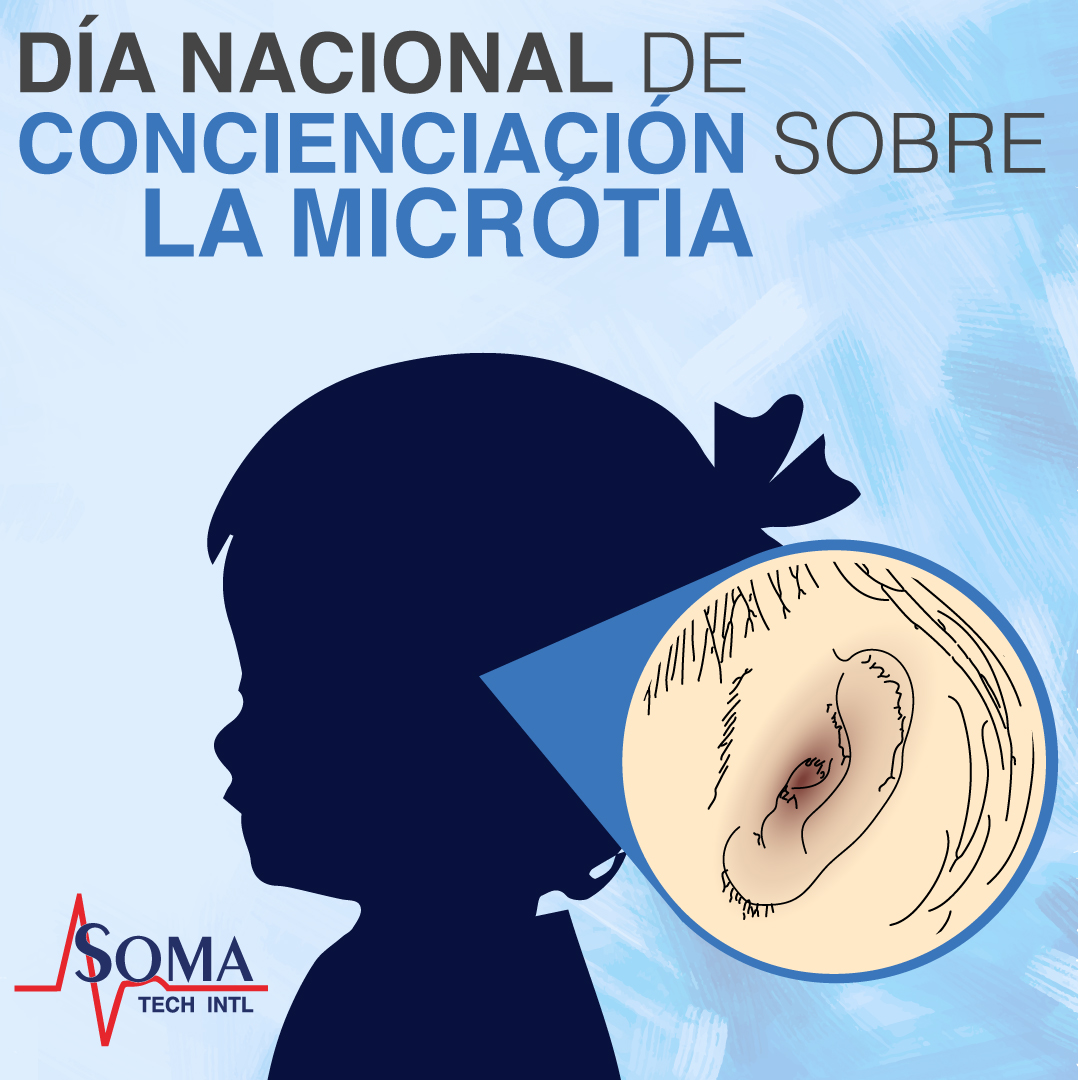
Día Nacional De Concienciación Sobre La Microtia

noviembre 9, 2020
Dia Nacional De Concienciacion Sobre La Microtia

National Microtia Awareness Day

THE IMPORTANCE OF NOVEMBER 9

Today, SOMA Tech Intl would like to dedicate National Microtia Awareness Day to spreading awareness of this medical condition. This congenital abnormality is a birth defect in which the outer part of a child’s ear is underdeveloped and usually malformed. The defect can affect one (unilateral) or both (bilateral) ears. So, mark your calendar and think of the number 9 as the shape of an ear.

HISTORY OF MICROTIA AWARENESS DAY

The Ear Community Organization founded National Microtia Awareness Day in 2016, and it was introduced by the Tumblin family. Melissa Tumblin founded the organization in 2010 after encountering the obstacles and challenges of finding answers for her daughter when she was born with microtia. The organization has brought together more than 6,500 people from around the world to share experiences and resources.

WHAT IS MICROTIA?

Derived from the Latin term for ‘small ears’, microtia is a birth defect of a baby’s ear. Microtia occurs when the outer ear is small and not formed correctly. Anotia occurs when the outer ear (the part of the ear that can be seen) is missing entirely.

Microtia usually develops during the first trimester of pregnancy, in the first few weeks of development. Its cause is mostly unknown, but it has sometimes been linked to drug or alcohol use during pregnancy , genetic conditions or changes, environmental triggers, and a diet low in carbohydrates and folic acid. Another possible factor that could put a child at risk for microtia is diabetes , if the mother was diabetic before pregnancy.

FOUR GRADES OF MICROTIA

Microtia is classified into four different types or degrees of severity:

  • Grade I: A slightly small ear with a shape very similar to a normal ear is usually accompanied by a small but narrow ear canal.
  • Grade II: A partial or half-ear with absence of the ear canal.
  • Grade III: Absence of most of the external ear with a small, peanut-shaped remnant lobe and absence of the external auditory canal and eardrum (atresia). This is the most common grade of microtia
  • Grade IV: Total absence of one ear, or anotia.

HOW MANY BABIES ARE BORN WITH MICROTIA?

According to the Centers for Disease Control and Prevention (CDC), researchers estimate that about 1 in every 2,000 to 10,000 babies is born with anophthalmia/microphthalmia in the United States alone.

TREATMENT

Treatment for babies depends on the type or severity of the condition. A healthcare provider or a hearing specialist called an audiologist will evaluate the baby’s hearing to determine if there is hearing loss in either ear. All treatment options should be discussed, and early action can provide better results. Hearing aids can be used to improve a child’s hearing and to help with speech development.

FINAL THOUGHTS

Some children born with microtia may experience partial or total hearing loss in the affected ear, which can impact their quality of life. Children with partial hearing loss may also develop speech impairments as they learn to speak. Interaction can be difficult because of the hearing loss, but therapy options are available that can help. Children born with congenital anomalies can lead full lives, especially with proper treatment and necessary lifestyle modifications.

Talk to your healthcare team about the best course of action for you or your child.

National Microtia Awareness Day

THE IMPORTANCE OF NOVEMBER 9

Today, SOMA Tech Intl would like to dedicate National Microtia Awareness Day to spreading awareness of this medical condition. This congenital abnormality is a birth defect in which the outer part of a child’s ear is underdeveloped and usually malformed. The defect can affect one (unilateral) or both (bilateral) ears. So, mark your calendar and think of the number 9 as the shape of an ear.

HISTORY OF MICROTIA AWARENESS DAY

The Ear Community Organization founded National Microtia Awareness Day in 2016, and it was introduced by the Tumblin family. Melissa Tumblin founded the organization in 2010 after encountering the obstacles and challenges of finding answers for her daughter when she was born with microtia. The organization has brought together more than 6,500 people from around the world to share experiences and resources.

WHAT IS MICROTIA?

Derived from the Latin term for ‘small ears’, microtia is a birth defect of a baby’s ear. Microtia occurs when the outer ear is small and not formed correctly. Anotia occurs when the outer ear (the part of the ear that can be seen) is missing entirely

Microtia usually develops during the first trimester of pregnancy, in the first few weeks of development. Its cause is mostly unknown, but it has sometimes been linked to drug or alcohol use during pregnancy , genetic conditions or changes, environmental triggers, and a diet low in carbohydrates and folic acid. Another possible factor that could put a child at risk for microtia is diabetes , if the mother was diabetic before pregnancy.

FOUR GRADES OF MICROTIA

Microtia is classified into four different types or grades of severity:

  • Grade I: A slightly small ear with a shape very similar to a normal ear is usually accompanied by a small but narrow ear canal.
  • Grade II: A partial or half-ear with absence of the ear canal
  • Grade III: Absence of most of the external ear with a small, peanut-shaped remnant lobe and absence of the external auditory canal and eardrum (atresia). This is the most common grade of microtia.
  • Grade IV: Total absence of one ear, or anotia.

HOW MANY BABIES ARE BORN WITH MICROTIA?

According to the Centers for Disease Control and Prevention (CDC), researchers estimate that about 1 in every 2,000 to 10,000 babies is born with anophthalmia/microphthalmia in the United States alone.

TREATMENT

Treatment for babies depends on the type or severity of the condition. A healthcare provider or a hearing specialist called an audiologist will evaluate the baby’s hearing to determine if there is hearing loss in either ear. All treatment options should be discussed, and early action can provide better results. Hearing aids can be used to improve a child’s hearing and to help with speech development.

FINAL THOUGHTS

Some children born with microtia may experience partial or total hearing loss in the affected ear, which can impact their quality of life. Children with partial hearing loss may also develop speech impairments as they learn to talk. Interaction can be difficult because of the hearing loss, but therapy options are available that can help. Children born with congenital anomalies can lead full lives, especially with proper treatment and necessary lifestyle modifications.

Talk to your healthcare team about the best course of action for you or your child.

Deja una respuesta

Tu dirección de correo electrónico no será publicada. Los campos obligatorios están marcados con *

For security, use of Google's reCAPTCHA service is required which is subject to the Google Privacy Policy and Terms of Use.

Explora Otros Blogs por Categoría