 ENGLISH
  Español
How Anesthesia Machines Work?
August 13, 2026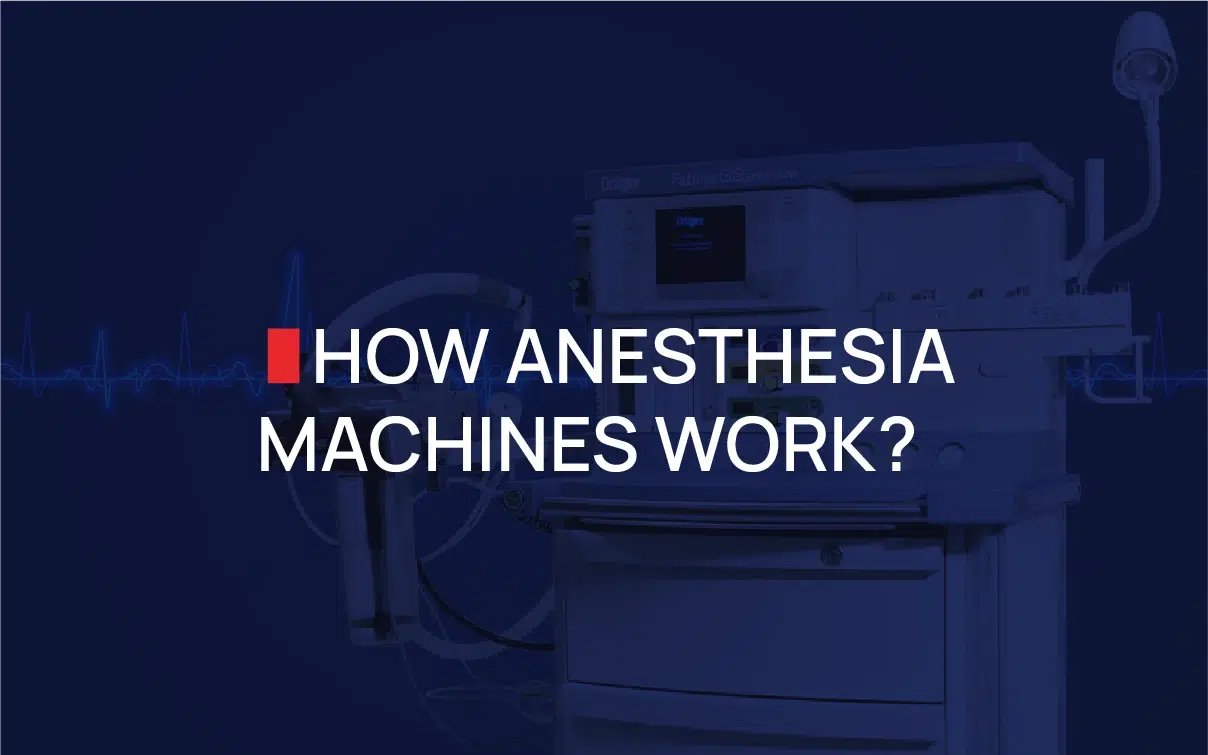
- What Is an Anesthesia Machine?
- How It Works
- Types of Anesthesia Machines and Ventilators
- Final Thoughts
What Is an Anesthesia Machine?
An anesthesia machine is a medical device that delivers a controlled mix of oxygen, air, and anesthetic gas to a patient during surgery. It also supports the patient’s breathing when they cannot breathe on their own under sedation. Today’s machines are often called anesthesia workstations because they combine gas delivery, a ventilator, and patient monitoring into one unit.
The University of Florida’s anesthesiology CME program describes the machine as a set of subsystems working together: gas supply, gas control, the breathing circuit, manual ventilation, mechanical ventilation, and waste gas removal. Each carries out one part of a single job: blend gas with anesthetic vapor, deliver it to the patient’s lungs, and remove exhaled carbon dioxide.
How It Works
Gas supply. Gas enters the machine from the hospital’s wall pipeline or from backup cylinders mounted on the machine. The pipeline runs at a steady, low pressure. Cylinders start at a much higher pressure and pass through a regulator that brings them down to a safe, working level before the gas moves further into the machine.
Safety check. Before the gas reaches any operator controls, it passes through a safety device that monitors oxygen pressure. The Anesthesia Patient Safety Foundation explains that this device reduces or shuts off other gases, such as nitrous oxide, the moment oxygen pressure drops, so a low-oxygen mixture can never reach the patient.
Flowmeters. These let the provider set exactly how much of each gas, oxygen, air, or nitrous oxide, flows into the system per minute. This combined flow is called the fresh gas flow.
Vaporizer. This component adds a controlled amount of anesthetic vapor to the fresh gas flow. Liquid anesthetic sits inside a chamber, and the machine splits the incoming gas so that part passes through the chamber and picks up vapor, while the rest bypasses it. According to NIH’s StatPearls medical reference, this split, called the splitting ratio, depends on the specific anesthetic agent and the concentration the provider dials in.
Common gas outlet. This is simply the point where the finished gas mixture, oxygen plus anesthetic vapor, leaves the machine and enters the tubing that connects to the patient.
Breathing circuit. Most machines use a closed loop called a circle system. One-way valves keep gas moving in a single direction: fresh gas flows toward the patient, and exhaled gas flows back into the machine rather than mixing with the incoming breath.
CO2 absorber. Because exhaled gas is recirculated rather than discarded, the carbon dioxide in it must be removed first. That a canister filled with a granular absorbent, commonly called soda lime, neutralizes the CO2 through a chemical reaction that also produces heat and moisture, which is why used absorbent changes color.
Ventilator. When a patient cannot breathe adequately on their own, the ventilator takes over. Anesthesia ventilators use one of two designs: a bellows that fills and empties inside a sealed chamber, or a piston driven by an electric motor. Both push gas into the lungs on a set schedule and let it flow back out.
Scavenging system. Any anesthetic gas that the patient does not absorb must leave the operating room rather than build up in the air. The leftover gas is routed into a scavenging system, which removes it either via a vacuum connection or by simply venting it through tubing.
Monitoring. Throughout the process, sensors monitor the oxygen and carbon dioxide levels and the pressure inside the circuit. If any reading falls outside a safe range, the machine alarms so the provider can respond right away.
Types of Devices
Dräger Apollo. offers an integrated breathing system that reduces the use of wires and tubes and reduces accidental disconnection of the patient from the machine during critical times.

Mindray A7. The feature-rich A7 combines traditional bellows-driven ventilation with electronic fresh-gas technology, providing effective care for a wide range of patients.

Maquet Flow-I. Ventilation technology based on the highly regarded Maquet SERVO platform. It has a re-breathing device called the MAQUET VOLUME REFLECTOR, which replaces traditional breathing circuits and provides additional security for the patient.

Final Thoughts
An anesthesia machine is built in layers. Gas supply, safety devices, flowmeters, the vaporizer, the breathing circuit, the ventilator, and the scavenging system each handle one piece of the job, keeping the patient safely anesthetized and oxygenated throughout a procedure. The Anesthesia Patient Safety Foundation has noted that there is no legally mandated retirement age for these machines, which puts the responsibility for safe performance on a facility’s own maintenance schedule. A machine that is well maintained, whether new or refurbished, continues to perform every one of these functions as designed.
Explore Other Blog Items By Category
Recent Posts


September 3, 2026
July 8, 2026
The Importance of Blanket Warmers
May 29, 2026